

Los Angeles, CA · Services
Cupping therapy in Los Angeles.
Suction cupping draws blood flow into tight, overworked tissue: a tool inside your plan for muscle tension, stubborn chronic pain, and athletes rebuilding after an injury who need extra recovery support.
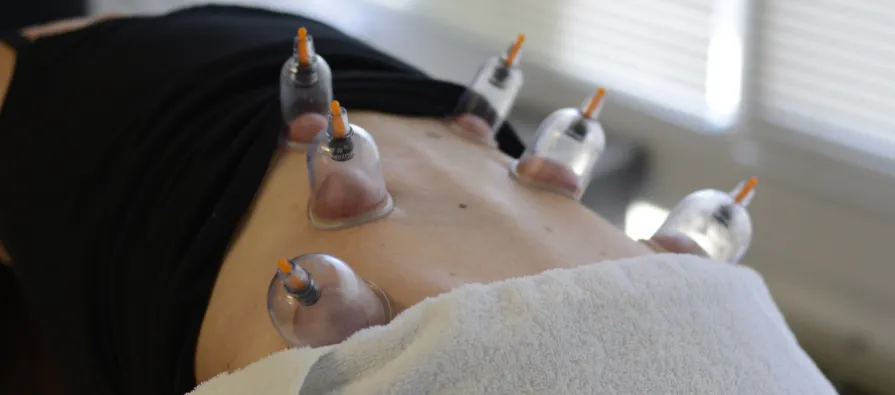
What is cupping therapy in Los Angeles?
Cupping is a centuries-old suction therapy. Cups placed against the skin create a gentle vacuum that draws blood flow into the tissue underneath, easing the muscle tension that manual therapy alone hasn’t fully released. Here, it’s never the starting point: it’s a tool your physical therapist adds once a cause-first evaluation shows exactly where tight, overworked tissue is holding you back.
Every session stays one-on-one with the same physical therapist, hands-on, for the full visit. Cupping tends to earn its place in the middle phases of care, Pain, Prime, Perform, and Prevent, in that order, once the acute irritation has calmed and the tissue needs help moving again, though your therapist will tell you exactly when and why it’s added to your plan.
And it’s never the whole plan. Cupping supports the work your evaluation already mapped out, and the plan itself still has an endpoint, named out loud before you agree to anything.
Calm it down.
Hands-on manual therapy addresses the acute irritation first. Cupping is introduced only once the tissue can tolerate the added blood flow, not on the first visit.
Restore what’s stuck.
Cupping draws circulation into stiff, guarded tissue, loosening what stretching and manual therapy alone haven’t moved.
Build strength you trust.
Cupping supports recovery between loading sessions, so strength work can progress without the tissue staying sore for days.
Make it stay fixed.
Cupping tapers as the tissue holds up on its own, replaced by the home program that keeps it that way.
What conditions does cupping help with?
Cupping is one tool inside a larger plan, most often added when tight, overworked tissue is part of what a cause-first evaluation finds. A sample of what it commonly supports:
Neck pain & headaches ⟶
The knotted upper traps and the tension headache that starts by lunch.
02Shoulder pain ⟶
The guarded muscle around a shoulder that hasn’t loosened with manual therapy alone.
03Low back pain ⟶
The tight band along the low back that flares before a long drive or a full day on your feet.
04Hip pain ⟶
The deep muscle guarding around a hip that’s been favoring one side for months.
Cupping doesn’t replace the evaluation that finds the actual cause. It supports the tissue while the rest of the plan does that work.
What does a cupping session look like?
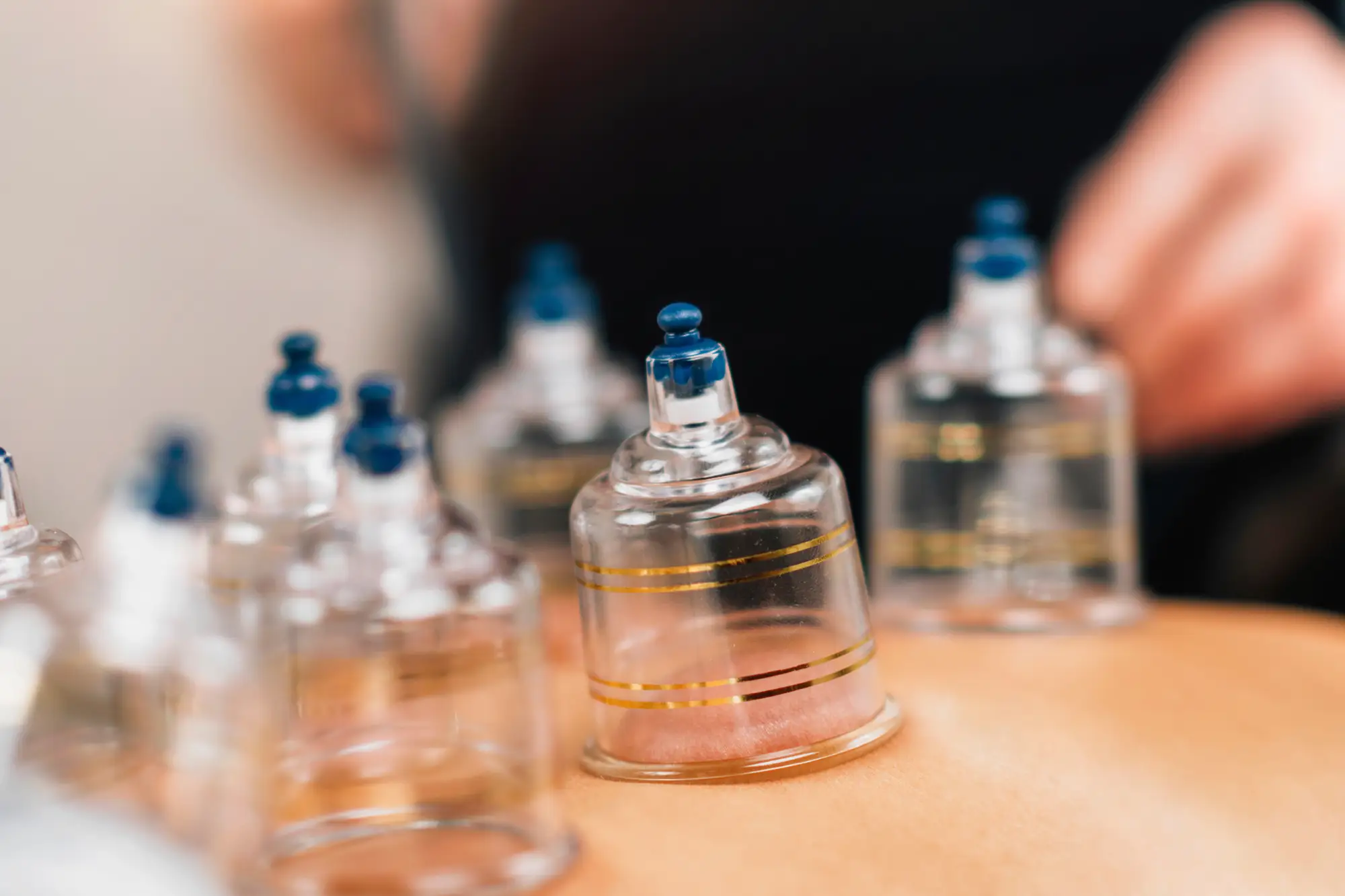
Cupping is added inside a normal visit, never booked as a stand-alone appointment separate from your plan. Your therapist places cups over the tight or overworked tissue the evaluation identified, using either stationary suction or slow gliding strokes, and checks in with you throughout.
Sessions typically run a few minutes at each site, folded into the hands-on manual therapy and movement work already scheduled for that visit. You may notice mild, temporary discoloration where the cups sat; that fades within days and is expected, not a bruise from injury.
Who this is for, and who it isn’t.
Cupping tends to fit patients whose evaluation turns up muscle tension that hasn’t fully released with manual therapy and movement alone: the knot that keeps returning, the chronic ache that’s plateaued, or an athlete rebuilding after an injury who needs extra soft-tissue recovery support between training sessions.
The people who ask for cupping by name are usually already deep in a plan and looking for one more tool to move a stubborn spot forward, not a substitute for the evaluation itself.
It’s not the right first stop for a new injury that hasn’t been evaluated, an open wound or skin condition at the treatment site, or as a stand-alone fix for pain nobody’s found the cause of yet. In those cases, the evaluation comes first, and cupping gets added only if it fits.
Good fit
- Muscle tension that hasn’t fully released with manual therapy alone
- Chronic pain that’s plateaued and needs one more tool
- Athletes returning from injury who need extra soft-tissue recovery support
- Already inside an evaluation-driven plan, looking to move a stubborn spot forward
Not the right first stop
- A new injury that hasn’t been evaluated yet
- An open wound or skin condition at the treatment site
- A stand-alone fix for pain nobody’s found the cause of
It’s a tool inside the plan, never the whole plan.
“Exceptional skill set and knowledge. Jason is compassionate, attentive, professional, cordial, and has a motivating approach.”Amy C. · Google review
Questions, answered plainly.
Most patients describe it as a strong pulling sensation, not pain. You may notice mild, temporary discoloration where the cups sat, similar to a hickey rather than a bruise from injury, and it typically fades within a few days.
Cupping is never a stand-alone treatment here. It’s added inside a visit once your cause-first evaluation and physical therapist agree the tissue would benefit, usually during the Prime or Perform phases of your plan, alongside the hands-on manual therapy and movement work already scheduled.
It depends on what the evaluation finds, not a set package. Cupping is added visit by visit as long as it’s helping move a specific tight area forward, and it tapers as your plan moves through Pain, Prime, Perform, and Prevent toward its named endpoint.
Usually, yes, once your evaluation clears the tissue for it. It’s commonly used to support recovery between training sessions during Perform and Prevent, though your therapist will tell you exactly when it fits your specific return-to-sport timeline.
Add cupping to a plan that already has a cause.
Put it in writing.
Five short questions. Our virtual assistant typically responds the same business day but may take up to 24 hours.
The people who end up filling this out are rarely in the worst pain of their life. They’re just done working around it, done picking the errand that doesn’t require the stairs. If that’s the stage you’re at, this is the part where you stop researching and start.
Consider it filed.
Our virtual assistant typically responds the same business day but may take up to 24 hours. Keep your phone nearby.
Can’t wait? Call (424) 365-2083 ⟶Easy to find. Easy to park.
In the neighborhood, with parking half a block away. Come see the place before you commit, if you like.
The clinic · Jason Ferine Physical Therapy
Get Directions ⟶Opens in Google Maps