

Los Angeles, CA · Services
Personal training in Los Angeles.
One-on-one, small-group, or hybrid training built on corrective exercise, run personally by Jason Ferine, MSPT, the practice’s founder, as your head trainer. Whether you’re chasing a performance goal or keeping an old injury from coming back, the program is built around how you actually move.
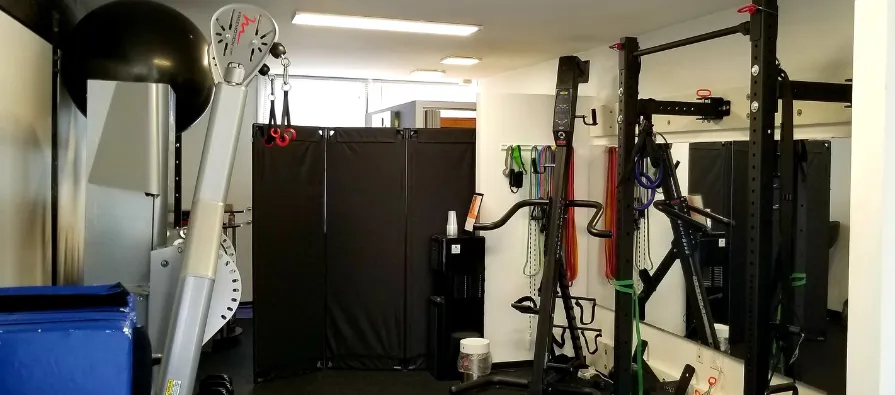
What is personal training at Jason Ferine Physical Therapy?
Personal training here starts from the same place physical therapy does: a real look at how you move, and what you’ve already been through, before anyone talks about how much you lift. Every new client gets a movement screen with Jason Ferine, MSPT, the practice’s founder, who runs this program personally rather than handing you off to a rotating roster of trainers. The squat, the hinge, the push, the pull, the carry, checked for technique and any pain flags, alongside the history that matters: the shoulder that still complains under a bar, the low back that tightens on a long week.
From there, training runs one-on-one, small-group, or a hybrid of both, whichever fits your schedule and your goal, with the corrective-exercise foundation and Jason’s direct involvement staying constant either way. It takes a whole-body approach on purpose: breath, control, and mobility get as much attention as load and reps, because a program that only chases numbers tends to rebuild the same imbalance it was supposed to fix.
The goal is yours to name. For some clients it’s athletic performance: real strength, power, and movement quality aimed at a specific target. For others it’s the long game: staying capable, and keeping an old injury from becoming a repeat visitor. Either way, programming moves through the same four phases as every plan here, Pain, Prime, Perform, and Prevent, and most training clients start in Prime or Perform: groove the pattern first, then add load you can actually own, then keep it built for the long run.
Screen before you load.
Every client starts with a movement screen, confirming there’s no unresolved pain or asymmetry before anything gets heavier.
Groove the pattern.
Squat, hinge, push, pull, and carry, built correctly under light load, with the mobility and control to back them up.
Add load you can own.
Progressive strength and performance work, tested before it gets heavier, aimed at your actual goal.
Keep it built.
Ongoing programming sized to your real week, so the strength you built stays yours and old problems stay quiet.
Who does personal training help?
Personal training isn’t only for people already hurt. It works well for people who’ve graduated physical therapy here and want to keep building strength on purpose, people who want the gains from a finished plan to hold, and people who want corrective-exercise-informed training from day one. A few starting points, for people building strength back after:
Knee pain ⟶
The squat and the stairs you’re ready to load again, guarded by a program built to keep them that way.
02Hip pain ⟶
The single-leg stance and the lateral step your hip’s ready to own again, before deconditioning sets back in.
03Low back pain ⟶
The deadlift pattern and the daily lifting you’re ready to load with confidence, without the old ache creeping back.
04Shoulder pain ⟶
The overhead press and the reach you fought to get back, kept by strength that doesn’t fade.
Graduating physical therapy doesn’t mean you’re finished getting stronger, it means you’re cleared to start. Without a program that keeps loading the pattern on purpose, a lot of that hard-won progress quietly slides back the way it came. None of this replaces the evaluation that found the actual cause; training is what keeps that work from needing to be redone.
What does a personal training session look like?
Every session opens with a quick check-in on how the last few days of training, work, or life have gone, because the load you can handle today isn’t always the load you handled last week. From there it’s technique work on the pattern of the day, then progressive strength or performance work blended with mobility and breath, dosed to where you are in the phase, tested before it gets heavier, not just added because a chart said so.
Jason stays hands-on and in the room for the full session, whether it’s one-on-one or small-group, never a printed sheet handed over and left alone. Before you leave, you know what today’s work was building toward and what the next session is going to ask of you.

Who this is for, and who it isn’t.
Personal training tends to fit a few kinds of people: graduates of physical therapy here who want to keep building strength on purpose instead of drifting back to where they started, anyone managing a chronic condition long term who’d rather train with structure than guess at home, and people who want corrective-exercise-informed training from day one, often with a specific athletic or performance goal in mind. You don’t need to already be a patient here to start; the movement screen is what tells us where to begin.
The people who choose this over a generic gym program are usually the same type: they want their training to account for how their body actually moves, not just how many sets are on the sheet, and they’d rather stay ahead of the old ache than wait for it to creep back. If that describes you, you’re the right client for this room.
It’s not the right first stop for new or unresolved pain that hasn’t been evaluated yet; that starts with a cause-first physical therapy evaluation, not a training session. And it’s not the right first stop for a medical emergency (chest pain, sudden numbness or weakness, a fracture that needs to be set). In those cases, call your physician or go to urgent care first, then come see us for the rehabilitation, and eventually the training, that follows.
Good fit
- Graduated physical therapy and want to keep building strength on purpose
- Want corrective-exercise-informed training from day one, not a generic program
- Training toward a specific athletic or performance goal
- Managing a chronic condition or an old injury that flares under stress or deconditioning
- Want a whole-body approach to breath, control, and mobility, not an isolated exercise sheet
Not the right first stop
- New or unresolved pain that hasn’t been evaluated yet (start with a physical therapy evaluation)
- A medical emergency: chest pain, sudden numbness or weakness, a fracture that needs to be set
Physical Therapy ⟶
The cause-first evaluation and the plan that clears you to train, for anything that still hurts.
02Infrared Sauna Therapy ⟶
In-clinic recovery between hard sessions, for the reset a heavy training week asks for.
It’s a different door into the same standard, not a downgrade or an upgrade.
“Jason is an outstanding trainer. I have been working with him for about 4 months and am extremely happy with the progress I’ve made.”Anthony B. · Google review
“Jason has a remarkable ability to blend his knowledge of physical therapy with fitness training to help me reach my goals.”Kathleen K. · Google review
Questions, answered plainly.
No. Some clients graduate physical therapy here and continue straight into personal training, but you can also start personal training directly. Everyone begins with a movement screen with Jason Ferine, MSPT, so training loads onto a body that’s already been checked for pain, asymmetry, and technique before anything gets heavier. If you’re dealing with pain that hasn’t been evaluated yet, a cause-first evaluation comes first.
Both. Some clients come in with an athletic or performance goal: strength, power, and movement quality aimed at a specific target. Others want whole-body programming that keeps an old injury quiet and keeps them capable for the long run. It’s one service with the same corrective-exercise foundation either way; your movement screen and your goal decide where the program puts its emphasis.
That’s a big part of the point. Programming is built around the region and the history that gave you trouble before, load, mobility, and control are progressed to keep it stable, and Jason adjusts the plan as your training changes, not a static sheet you outgrow in a month.
It’s whichever fits you: one-on-one, small-group, or a hybrid of both. The format changes; the corrective-exercise foundation and Jason’s direct involvement as head trainer don’t.
Expect a conversation about what you’ve already been through, then a movement screen before any loading: squat, hinge, push, pull, and carry patterns checked for technique, mobility, and any pain flags. From there, Jason builds your programming around what the screen actually found, not a template handed to every new client. Wear clothes you can move in and plan for about 40 minutes.
Start with a movement screen, not a template.
Put it in writing.
Five short questions. Our virtual assistant typically responds the same business day but may take up to 24 hours.
The people who end up filling this out are rarely in the worst pain of their life. They’re just done working around it, done picking the errand that doesn’t require the stairs. If that’s the stage you’re at, this is the part where you stop researching and start.
Consider it filed.
Our virtual assistant typically responds the same business day but may take up to 24 hours. Keep your phone nearby.
Can’t wait? Call (424) 365-2083 ⟶Easy to find. Easy to park.
In the neighborhood, with parking half a block away. Come see the place before you commit, if you like.
The clinic · Jason Ferine Physical Therapy
Get Directions ⟶Opens in Google Maps